


















Many people are living unhoused in Portland right now.
Between 2023 and 2024, houselessness rates rose by 18 percent in the US, affecting 770,000 people, the highest record to date. Portland physically doesn’t have enough places built for people to live, and the housing that is available is impossible for the average person to afford. A minimum-wage worker in Portland earning $16.30 an hour must work 70 hours per week just to afford a basic one-bedroom apartment.
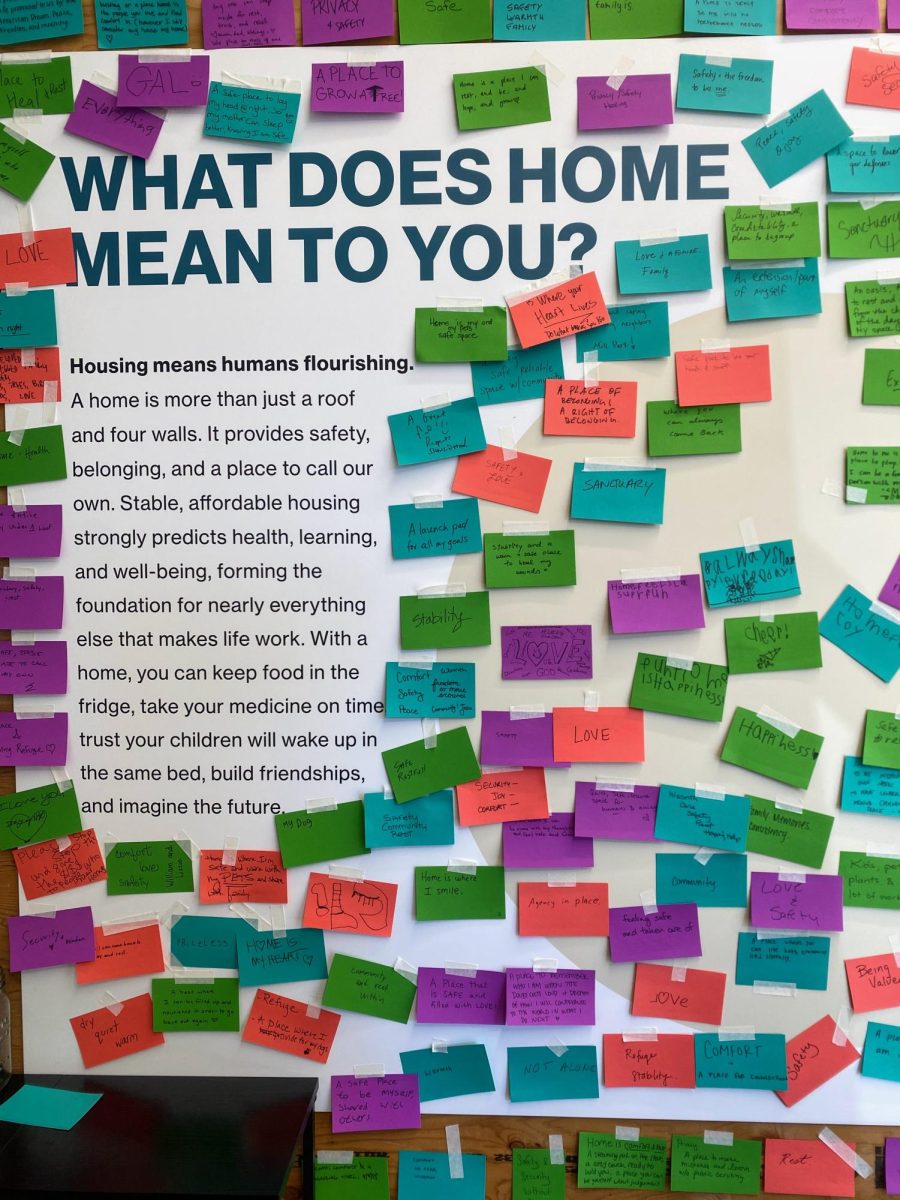
In a recent exhibit at Stelo Arts in downtown called Dear Portland, the statistics of the housing crisis were transformed from just numbers to deeply personal anecdotes of the houseless experience. The gallery featured six video interviews of Portlanders who lived without stable housing. “Housing is to humans what breathing is to humans,” said one interviewee, Bronwyn, who lived in Portland for nine years without stable housing. Those with the privilege of stable housing often take it for granted, overlooking the mental and physical obstacles others face without that privilege.
Avoiding houselessness is a challenge in today’s reality, and nearly a million Americans are losing lasting shelter. For many, all it takes is a lay-off, a medical bill, or a mental health struggle to end up without the security and safety of housing. Now more than ever, a call to action on housing injustice is increasingly important.
According to The Pew Research Center, increases in rent directly lead to increases in houseless rates. Eviction prevention is one of the most effective and cheap methods of impeding houselessness. Dear Portland described eviction prevention as an “up-stream solution,” meaning focusing on KEEPING people housed. This goes along with “down-stream solutions” that focus on GETTING people housed. Both are part of the action that needs to be taken to address this crisis. However, Oregon lawmakers continue to neglect eviction prevention. In June 2025, the Oregon legislature passed House Bill 5011 that cut roughly $33.6 million from eviction prevention programs like rental assistance.
An “eviction moratorium” is a temporary legal ban on evicting tenants. During the COVID-19 pandemic, many eviction restrictions were implemented around the US, but in recent years, they have been removed as lawmakers de-prioritize keeping people housed. It’s incredibly important that our local leaders stand up for working-class AND unhoused
communities. Especially with ICE activity in the streets, cities like Minneapolis and Los Angeles have organized themselves to call out lawmakers trying to evict families in times of fear and oppression.
Projects like Dear Portland feel like a step in the direction of positive change. Education, empathy, and community advocacy are the tools for working towards greater collective understanding and support within Portland spaces. But we also need more definitive action by those in power. Now is the time to demand meaningful and lasting legislation to ensure housing is treated as the basic human right that it is.