




















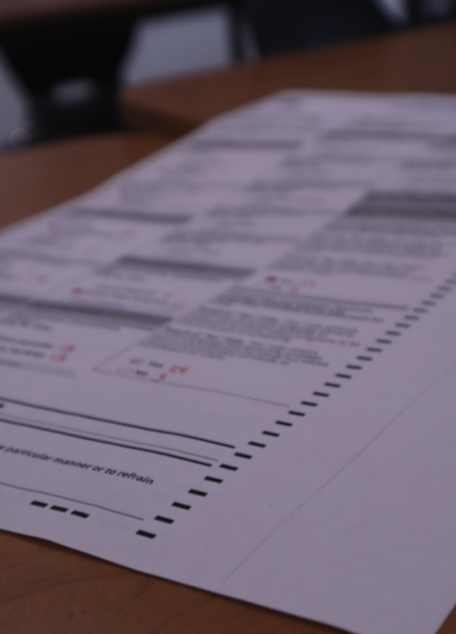
Over the course of the last three decades, Oregon has strived to diminish voter suppression and make voting more accessible for all state citizens. While the majority of Oregon’s population is located in the Willamette Valley, the changes made to Oregon voter laws affect the entire state.
Another Oregon law that enhances the voting experience is the Motor Voter Act (passed in 2016). This says that when a person in Oregon goes to renew or gain a drivers license, they are automatically registered to vote (if they are eligible and not already registered). The process to become a registered voter can be long and full of paperwork. The prospect of combining getting your license and registering to vote has the opportunity to make voting seem more accessible to the youth.
Voter Suppression is “any legal or extralegal measure or strategy whose purpose or practical effect is to reduce voting, or registering to vote, by members of a targeted racial group, political party, or religious community.” Over the course of US history, voter suppression has had a heavy influence on elections at all levels and has changed the face of our democracy. We can see the fight against voter suppression decades back during the civil rights movement when the Voting Rights Act of 1965 banned the use of literacy tests and poll taxes in state and local elections. In more recent years, bills like the Anti-Voter Suppression Act introduced to congress in 2017 have helped to continue the fight against voter suppression.
Though throughout our country’s history voting has not been accessible or equitable for all citizens, the changes and laws that are being made, especially the ones we are seeing in Oregon, have the potential to advance voting rights in the United States forever.